Iran Leadership Rift Deepens as IRGC President and Supreme Leader Face Mounting Pressure
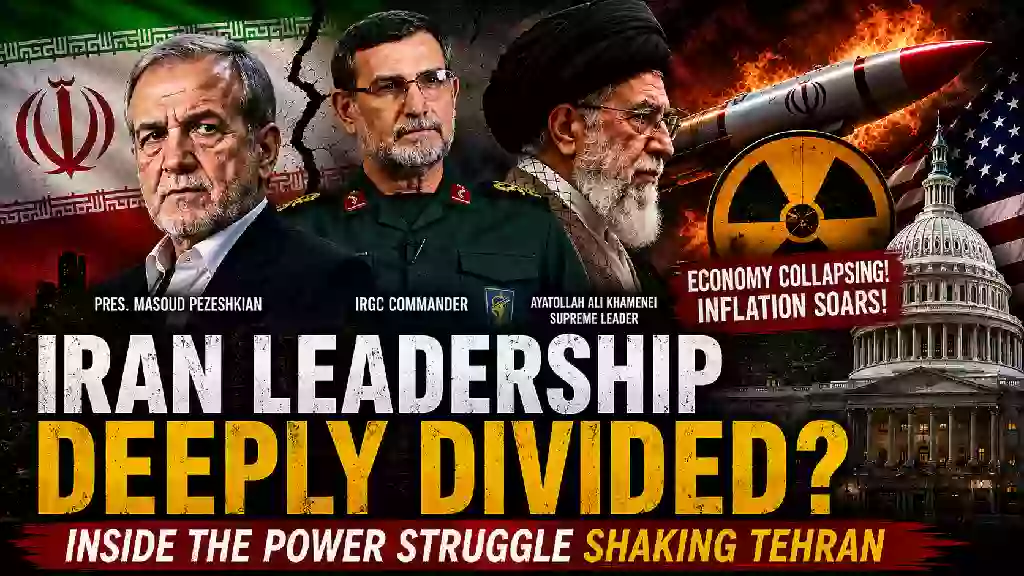
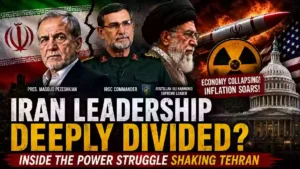
Iran’s leadership faces mounting pressure as President Masoud Pezeshkian, the IRGC and Supreme Leader Ayatollah Ali Khamenei are at the center of an alleged internal power struggle amid economic hardship, inflation and tensions with the United States.
Iran Leadership Rift Deepens as IRGC President and Supreme Leader Face Mounting Pressure
Retired US General Warns of Serious Split Inside Iran’s Leadership as Economic Crisis and Regional Tensions Escalate
Iran may be facing a significant internal struggle at the highest levels of government as economic hardship, military tensions and pressure from the United States continue to weigh on the country, according to retired U.S. Air Force Gen. Charles Wald.
The former four-star general and former deputy commander of U.S. European Command said Iran’s president, Islamic Revolutionary Guard Corps (IRGC) leadership and Supreme Leader Ayatollah Ali Khamenei may not be fully aligned over how Tehran should respond to the country’s growing challenges.
Wald’s assessment comes after a 12-day war with Israel and amid continuing tensions between Iran and the United States.
Iran’s Leadership May Be Divided
Speaking about Iran’s current political situation, Wald described what he believes is a “serious internal split” within the Iranian leadership.
He pointed to differences between President Masoud Pezeshkian, the IRGC leadership and the country’s Supreme Leader. According to Wald, those divisions could make it difficult to determine whether statements from Tehran represent a unified government position.
The retired general urged caution when assessing potential negotiations with Iran, arguing that internal disagreements could affect Tehran’s commitments and decision-making.
The comments come as Pezeshkian has publicly suggested that the war should eventually end. Iranian state media reported his position that ending the conflict while Iran remains in a position of strength and dignity would be preferable to allowing the confrontation to continue indefinitely.
Economic Crisis Adds Pressure on Tehran
Iran’s political tensions are unfolding against a backdrop of serious economic difficulties.
The country’s nuclear program remains a major source of international controversy. While Iran has described the program as being connected to energy needs, concerns remain over whether national resources should instead be directed toward improving living conditions.
The source material highlights the frustrations of ordinary Iranians dealing with problems involving inflation, electricity, water and the broader economy. At the same time, U.S. sanctions continue to add pressure to Iran’s financial situation.
For Iran’s leadership, balancing military priorities with domestic economic concerns presents a difficult challenge.
IRGC Takes a Hard-Line Position
The Islamic Revolutionary Guard Corps remains an influential force in Iran’s military and political establishment. Wald suggested that the IRGC may favor maintaining pressure and confrontation rather than quickly pursuing an agreement with Washington.
Iranian military officials have also continued to issue strong warnings in response to U.S. threats of additional economic pressure.
Iran’s armed forces said they were prepared to respond across land, sea, air, air defense and cyberspace, using language warning of severe consequences for what Tehran considers hostile actions.
Wald argued that such statements may be intended as much for an Iranian domestic audience as for the United States.
Growing Public Frustration Could Become a Concern
According to Wald, Iranian authorities may be increasingly concerned about public dissatisfaction.
He pointed to previous protests and claimed that the government’s response demonstrated how seriously Iranian leaders view the possibility of renewed unrest. He also cited reports of extremely high inflation and the declining value of Iran’s currency.
One example discussed in the interview involved an Iranian woman reportedly paying 85 million rials, or approximately $65, for basic groceries. The example was presented as evidence of the extraordinary pressure facing Iranian consumers.
If economic conditions continue to deteriorate, domestic pressure could become an increasingly important factor in Iran’s political calculations.
Strait of Hormuz Remains a Strategic Pressure Point
Another major issue is the Strait of Hormuz, a strategically important waterway connected to global energy shipments.
Wald argued that maintaining access through the strait could be an important part of U.S. strategy toward Iran. He suggested that opening the waterway for limited periods each day could increase economic pressure on Tehran.
That proposal reflects Wald’s assessment of how the United States could attempt to pressure Iran while limiting its ability to threaten the region militarily.
Iran Faces Difficult Choices
Iran’s leadership now faces a complicated combination of economic hardship, military pressure and possible divisions at the highest levels of government.
The central question is whether President Pezeshkian, the IRGC and Iran’s Supreme Leader can maintain a unified approach as pressure increases.
Wald believes Iran may be attempting to buy time while projecting strength publicly. Whether that strategy succeeds could depend on the country’s economic stability, internal political cohesion and its ability to manage continued confrontation with the United States and its regional adversaries.
For Tehran, the stakes are significant. A prolonged confrontation could deepen economic problems, while negotiations could expose disagreements within Iran’s leadership. The coming period could therefore test not only Iran’s military strategy but also the stability and unity of its political system.
#Iran #IranLeadership #IRGC #IranEconomy #IranInflation #IranNuclearProgram #StraitOfHormuz #MiddleEast #USIran #IranIsrael