Trump Press Briefing Targets Immigration – Crime and Paid Insurrectionists!
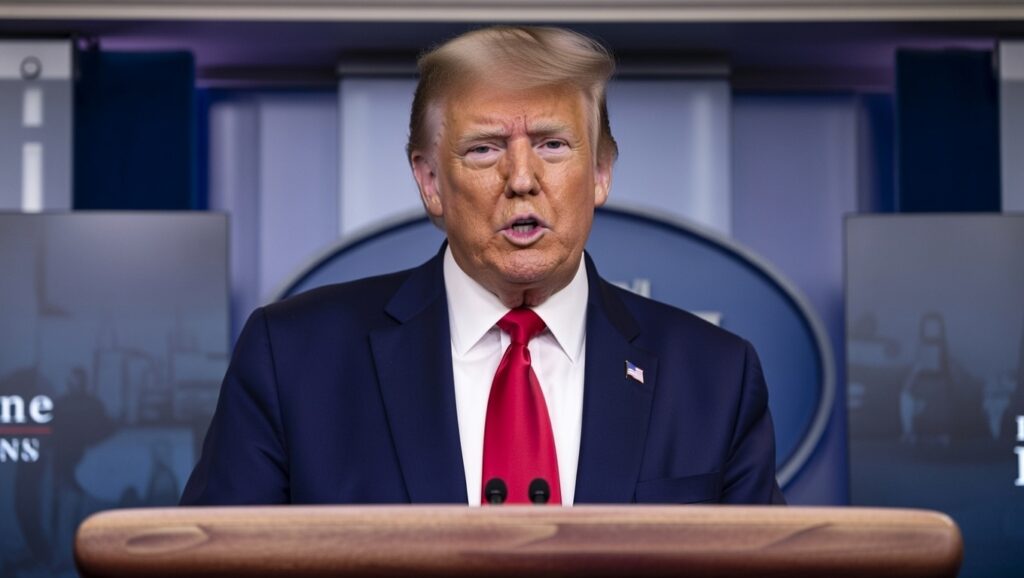
Trump Press Briefing Targets Immigration
Trump Press Briefing Targets Immigration, Crime, and “Paid Insurrectionists”
In a lengthy and forceful press briefing, Donald J. Trump laid out what he described as overwhelming evidence of criminal activity tied to illegal immigration, sharply criticizing the previous administration’s border policies and defending the work of Immigration and Customs Enforcement (ICE) and Border Patrol agents. The remarks, which focused heavily on Minnesota and California as examples, framed immigration enforcement as a public safety issue rather than a political talking point.
Trump repeatedly argued that lax border enforcement under Joe Biden allowed dangerous criminals to enter and remain in the United States, placing communities at risk and overwhelming state resources.
“These Are Not Ordinary Cases”
During the briefing, Trump displayed what he described as case files and images of individuals arrested or removed by ICE. He emphasized that many were not accused of minor offenses, but convicted criminals, including murderers, gang members, drug traffickers, and individuals described as mentally unstable and violent.
“These are rough people,” Trump said, stressing that the examples he presented represented only a fraction of the total cases. According to his remarks, Minnesota alone has seen thousands of arrests involving serious crimes, which he said rarely receive national media attention.
Trump framed the issue bluntly: “Do you want to live with these people?” He argued that the question should be at the center of the immigration debate, rather than what he described as “political spin” surrounding enforcement actions.
Minnesota as a Case Study
Minnesota became a focal point of the briefing. Trump alleged that the state has experienced not only rising violent crime but massive financial fraud tied to organized schemes. He claimed that billions of dollars—at least $19 billion by his estimate—had gone missing through fraud operations, some of which he linked to immigrant networks.
While acknowledging that not everyone involved was directly responsible, Trump argued that organized crime rings exploited weak oversight systems, enriching themselves while taxpayers bore the cost. He contrasted this with what he described as Switzerland and other countries that, in his view, do not face similar challenges due to stricter enforcement and national cohesion.
Criticism of “Paid Agitators” and Protests
Another major theme of the briefing was Trump’s claim that protests against ICE operations are not organic but orchestrated by what he repeatedly called “paid agitators” or “paid insurrectionists.” He suggested that many of the most vocal demonstrators are professionals trained to disrupt enforcement actions and sway public opinion.
Trump cited incidents where protesters appeared highly coordinated and amplified their presence during arrests or removals. In his telling, these demonstrations are designed to intimidate law enforcement officers and frame criminals as victims, while ignoring the crimes that led to their arrests.
Defense of ICE and Border Patrol
Trump offered strong praise for ICE and Border Patrol, calling their work dangerous, demanding, and essential to national security. He highlighted that a significant percentage of these agents are Hispanic, pushing back against accusations that enforcement policies target minority communities.
He argued that agents face abuse from activists and media figures while carrying out lawful orders to remove individuals with serious criminal records. “All they want to do is get them out of our country and return them to prisons, jails, or institutions where they came from,” Trump said.
Venezuela, Foreign Cooperation, and Enforcement
The briefing also touched on international cooperation. Trump claimed that countries such as Venezuela had previously emptied prisons and allowed criminals to migrate north. He contrasted that with what he described as improved cooperation more recently, including coordination to return individuals facing serious charges.
He added that immigration enforcement is not just domestic policy but foreign policy, requiring constant coordination with other governments to ensure that deported individuals are properly detained or prosecuted.
A Political Line in the Sand
Trump closed by returning to his core argument: that open-border policies created a crisis that law enforcement is now struggling to contain. He described the current effort as a cleanup operation—removing individuals who should never have been admitted in the first place.
For Trump and his supporters, the briefing reinforced a familiar message: immigration enforcement equals public safety. For critics, the remarks underscored deep divisions over immigration, protest, and the role of federal authority.
Regardless of perspective, the speech made clear that immigration and crime will remain central issues in the national debate heading into the coming election cycle—and in local communities far from Washington, D.C., including places like Oklahoma, where border policy decisions still shape public safety, budgets, and law enforcement resources.
#BorderSecurity #ICE #ImmigrationPolicy #PublicSafety #NationalSecurity