Milwaukee County Judge Hannah Dugan Found Guilty in High-Profile Federal Trial
A Shocking Verdict in a Landmark Case
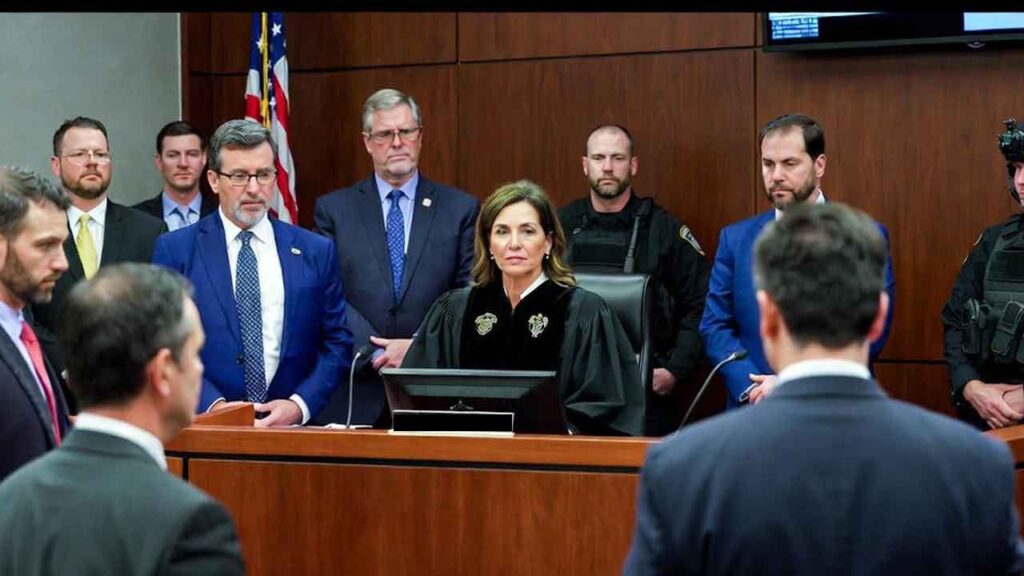
In a closely watched federal trial that highlighted tensions between state judiciary and federal immigration enforcement, Milwaukee County Circuit Court Judge Hannah Dugan was convicted on December 18, 2025, of felony obstruction of a proceeding before a U.S. department or agency. The jury acquitted her on a related misdemeanor charge of concealing an individual to prevent discovery and arrest.
The case stemmed from an April 18, 2025, incident at the Milwaukee County Courthouse. Immigration and Customs Enforcement (ICE) agents, armed with an administrative warrant, sought to arrest Eduardo Flores-Ruiz, a 31-year-old undocumented immigrant from Mexico who had appeared before Dugan on a misdemeanor battery charge. Prosecutors alleged that Dugan interfered by confronting the agents, questioning their warrant, directing them to the chief judge’s office, and allowing Flores-Ruiz and his attorney to exit through a restricted jury door, enabling him to evade immediate arrest (though he was later apprehended).
The Trial Unfolds: Key Testimony and Defense Strategy
The four-day trial featured intense testimony from federal agents, courthouse staff, and fellow judges. Prosecutors presented surveillance footage, courtroom audio, and witness accounts portraying Dugan as deliberately obstructing federal officers. Key evidence included audio where Dugan reportedly said, “I’ll take the heat,” before escorting Flores-Ruiz out a non-public exit.
Dugan’s defense, led by attorneys Steve Biskupic and Jason Luczak, argued she acted in good faith amid confusion over courthouse policies on ICE arrests. They called four witnesses, including Milwaukee County Circuit Judge Katie Kegel and former Milwaukee Mayor Tom Barrett as a character witness, who described Dugan as “extremely honest.” Notably, Dugan did not testify herself.
Closing arguments were starkly contrasting: Prosecutors emphasized that a courtroom must remain neutral and that Dugan abused her position. The defense accused the government of overreach and attempting to make an example of her amid the Trump administration’s immigration crackdown.
After more than six hours of deliberation, the jury delivered a split verdict. Dugan showed no emotion in court, and the jury foreman later told reporters he followed instructions faithfully but was “not feeling too good.”
What the Conviction Means: Potential Consequences
The felony obstruction charge carries a maximum sentence of up to five years in prison and substantial fines. While prison time is possible, legal experts suggest probation or a lighter sentence is more likely for a first-time offender in a non-violent case.
Dugan’s legal team expressed disappointment and plans to file post-trial motions, including to set aside the conviction due to the split verdict. A sentencing date has not yet been set.
Broader Implications and Reactions
This marks the first trial of a state judge on charges of obstructing federal immigration agents, underscoring clashes between local courts and federal enforcement. Dugan’s supporters view the case as political intimidation, while prosecutors insist it upholds the rule of law.
The verdict raises questions about judicial independence, courthouse security policies, and the intersection of state and federal authority in immigration matters. As Dugan faces the fallout—including likely removal from the bench and potential disbarment—her career in law appears severely impacted. The case remains far from over, with appeals and further proceedings expected.